First recognition certificates awarded
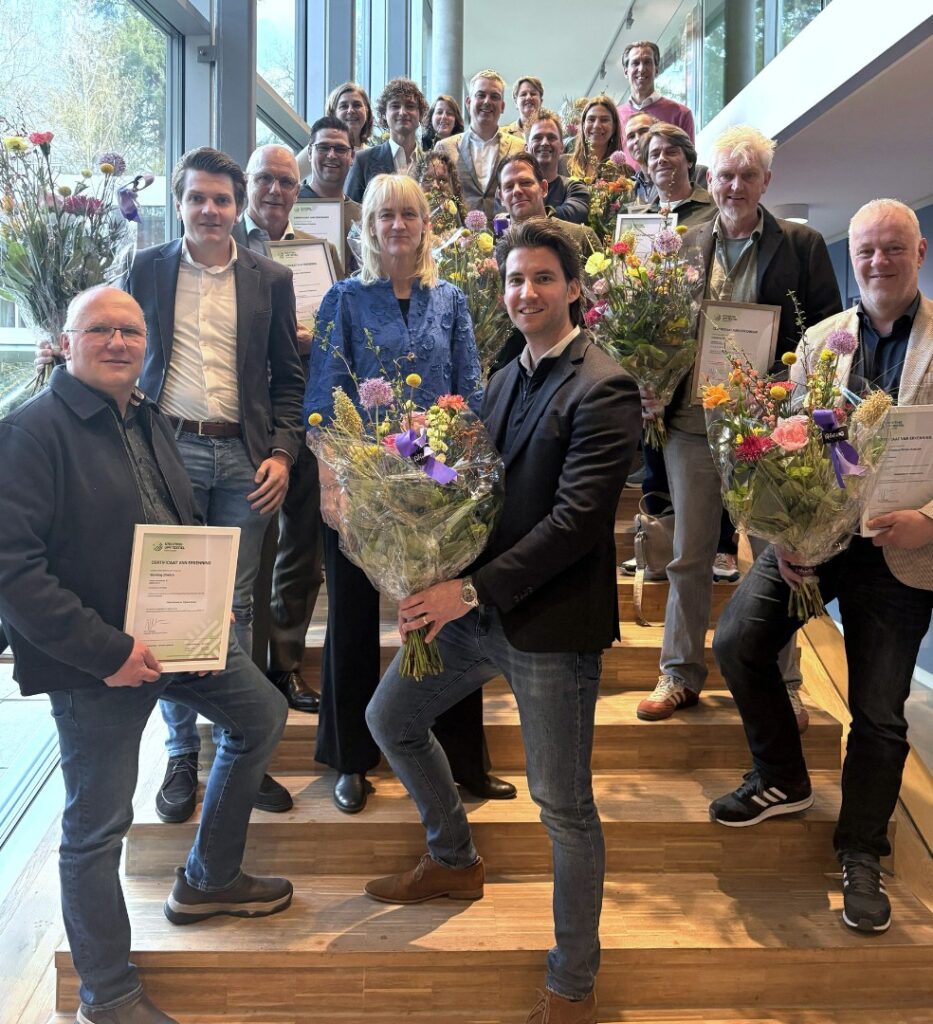
19 March 2026- On 16 March, Stichting UPV Textiel awarded recognition certificates to eight textile collectors, sorters and recyclers. This demonstrates that they comply with the requirements of the Recognition Scheme.
In doing so, Stichting UPV Textiel—together with its partners—is building an important foundation for the implementation of extended producer responsibility by ensuring that the textile value chain demonstrably operates according to clear standards in the areas of quality, environmental performance and working conditions.
“With these recognitions, we make visible which parties are working in line with clear standards. This is essential for a transparent and well-functioning textile value chain,” said Sekhar Lahiri, Director at Stichting UPV Textiel.
Through independent assessment and uniform registration requirements, greater insight is gained into textile flows—from collection through to final processing. This is essential for monitoring performance across the chain, improving where necessary, and making adjustments where needed. At the same time, it contributes to a level playing field for service providers that invest in quality and transparency.
Service providers
Service providers play a key role in the implementation of extended producer responsibility. They are responsible for the practical organisation of the collection, sorting and processing of textiles. In recent months, Stichting UPV Textiel has visited a number of organisations to assess whether they comply with the requirements of the Recognition Scheme.
These visits are not only supervisory in nature, but also aimed at strengthening the value chain. By engaging in dialogue about processes, registration and quality, we work together with service providers towards further professionalisation and greater uniformity in implementation.
Transparent textile flows with Retex
The Retex monitoring system is an important part of the Recognition Scheme. Within this system, service providers record how much textile they collect, sort or recycle, what its destination is, and where the material ultimately ends up.
Network of recognised service providers
With the first certificates awarded, an important step has been taken in building a nationwide network of recognised service providers. This network is essential to realise the ambitions of extended producer responsibility and to achieve a stable, scalable and future-proof circular textile value chain.
In the coming period, more organisations will receive their certificates or go through the recognition process. This will not only expand the network, but also strengthen the shared foundation for collaboration, transparency and further development of the value chain.